Lumber Inventory Valuation Methods for Sawmills: FIFO, Average Cost, and Specific Identification Compared
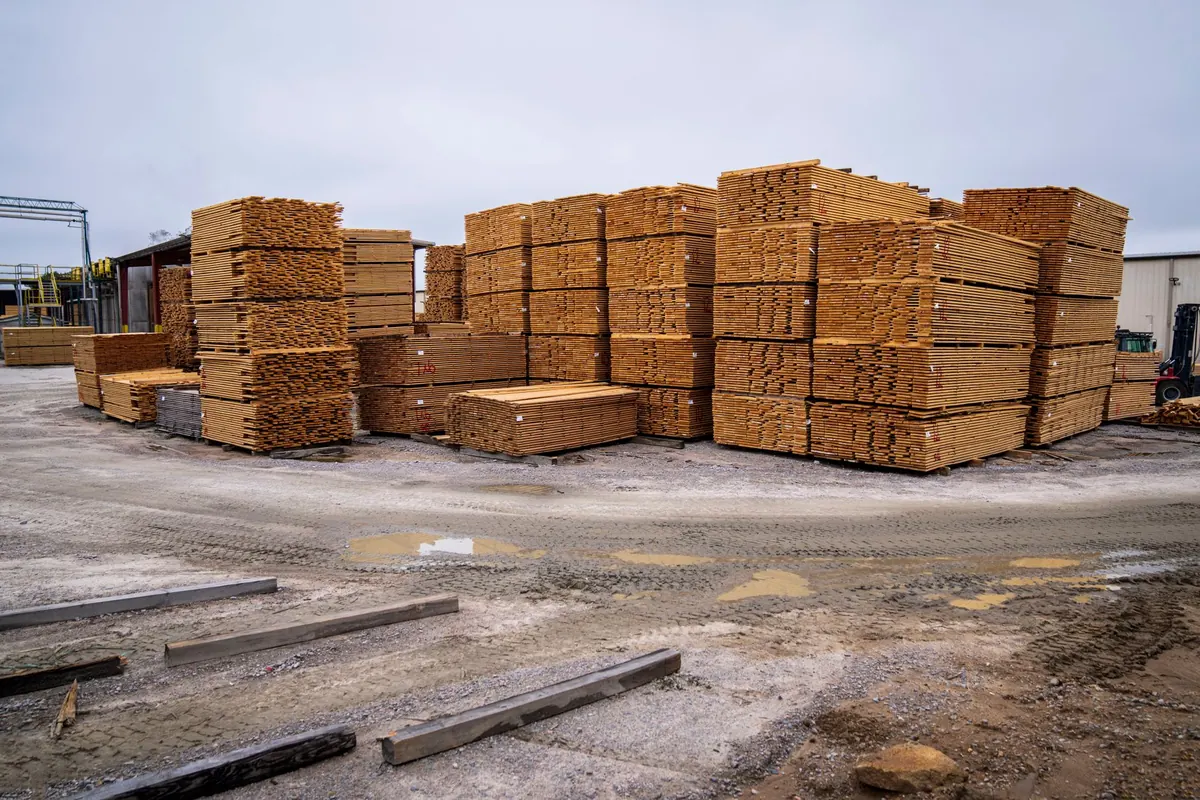
Ask two sawmill owners what a thousand board feet of green red oak costs them and you may get two honest, different answers. One is thinking about the load that arrived Tuesday. The other is thinking about the average of everything in the yard. Both may be right under their own accounting method — and that choice quietly shapes gross profit, taxable income, and how the mill looks to a lender.
Inventory costing is not a math problem with one answer. It is a policy decision, and for a mill that runs logs, green lumber, kiln-dried stock, and by-products through the same yard, it deserves more than a default setting in the accounting software.
Lumber is not a box of identical bolts. Two loads of the same species logged a month apart can carry different delivered costs because of stumpage, haul distance, fuel surcharges, and grade mix. A log that goes into a custom walnut order and a log that becomes pallet cants have different economic lives. Add conversion costs — sawing labor, electricity, blades, drying fuel, depreciation on the headrig — and the question of what a board foot actually cost becomes genuinely complicated.
Most mills handle it with three approaches: first in, first out (FIFO); weighted average cost; or specific identification. Each is defensible. Each tells a different story.
FIFO assumes the oldest logs are sawn first. In a mill, that is often what physically happens anyway: log decks are managed so that older wood does not degrade in the yard, and nobody wants a load of pine sitting through a hot August.
Under FIFO, when logs are consumed, you charge the earliest purchase prices to cost of sales. In a rising log market — the normal pattern over any multi-year stretch — FIFO produces the lowest cost of goods sold and the highest reported gross profit. Ending inventory sits at the newest, most expensive prices.
That is the trade-off in plain terms: FIFO makes your income statement look strong and your balance sheet look current, and it raises taxable income in an inflationary year.
Weighted average cost pools the cost of all logs in a category and divides by the total volume. Add a load at a new price, recalculate, and every board foot carries the same blended cost until the next receipt.
For a mill buying dozens of loads a month in the same species and grade, average cost is the least fussy method to maintain and it dampens the swings. A spike in stumpage prices does not land entirely in one month's cost of sales. It spreads across the inventory that is still moving through the yard.
The catch is discipline about pools. If you pool red oak with soft maple, your average cost is meaningless for pricing either one. Most mills pool by species and by stage — logs, green lumber, kiln-dried lumber — and sometimes by grade class as well.
Specific identification traces the actual cost of a specific log, load, or lumber package to the specific sale. It is the most accurate method and the most demanding.
It fits certain work well: custom-cut orders for a timber-frame customer, high-value species where one load can be worth more than a week of production, contract sawing where you never own the log, and specialty by-products sold on separate agreements. If a walnut order is filled from a load you bought at a known price, you can state that job's margin exactly.
Where it breaks down is volume production of commodity lumber. Trying to tag individual boards through a planer mill is a record-keeping burden that rarely pays for itself.
Here is a simplified example. Say a mill buys 120 MBF of logs across three months in equal 40 MBF loads: $500, $600, and $700 per MBF. Total cost, $72,000. During the quarter, it saws and sells the output from 90 MBF, leaving 30 MBF in inventory. Lumber sales come to $120,000.
A $3,000 swing on one quarter is small. Scale it to a year of rising log costs and the same difference shows up in taxable income, in the inventory line your bank reviews, and in the margin you think you are earning on each species.
Tax authorities generally want an inventory method that clearly reflects income and is applied consistently. FIFO, weighted average, and specific identification are all commonly accepted. LIFO is also permitted in the United States, but it requires a formal election, and in a sawmill it brings the additional complexity of inventory pools — which is why many mills leave it alone.
Two habits matter more than the choice itself. First, pick a method per inventory pool and stick with it; switching methods is treated as a change in accounting method and generally requires filing for permission. Second, follow the lower of cost or market rule for slow-moving grades. If a stack of low-grade boards will not sell for what you paid to produce it, the write-down belongs in the books now.
By-product credits are worth setting up properly too. Chips, sawdust, bark, and shavings sold to a paper mill or a mulch yard can be credited against log cost, which reduces your inventory value and your cost of sales. Decide the treatment once and apply it consistently.
Tax rules vary by jurisdiction and entity type. Run your method choice past a CPA who has seen a mill's books before — the fee is small next to the cost of restating three years of returns.
The best inventory method is the one your scale house, sawyer, and bookkeeper can all keep accurate on a busy Friday. Weigh and ticket every incoming load, record species and grade, post receipts to the correct pool, and reconcile the log deck count to the system monthly. A valuation method is only as good as the data underneath it. When the numbers are clean and consistent, the choice between FIFO, average cost, and specific identification becomes what it should be: a deliberate business decision rather than an accident of setup.
Photo: Mark Stebnicki / Pexels
Previous Post
How to Invoice Custom Milling Jobs: Line Items for Board Feet, Setup Time, and Blade Fees
Next Post
Monthly Mill Production Report Template: Tracking Logs In, Lumber Out, and Cost per Board Foot